
A brochure design agency turns what your business offers into a document that sells: a clear story, a layout that guides the eye and a look that is unmistakably yours. The best results come from a studio that treats the brochure as part of your brand, not a standalone layout job. That is how we work at 1975, a graphic design studio in Norwich that has been creating brands and digital magazines since 2007, and it is the standard to hold any agency to.
This guide covers what the service includes, how a project runs, what to prepare, and the design principles that separate a brochure people keep from one they bin.
TL;DR
- A good brochure agency starts with your objectives and audience, then designs, rather than starting with a template.
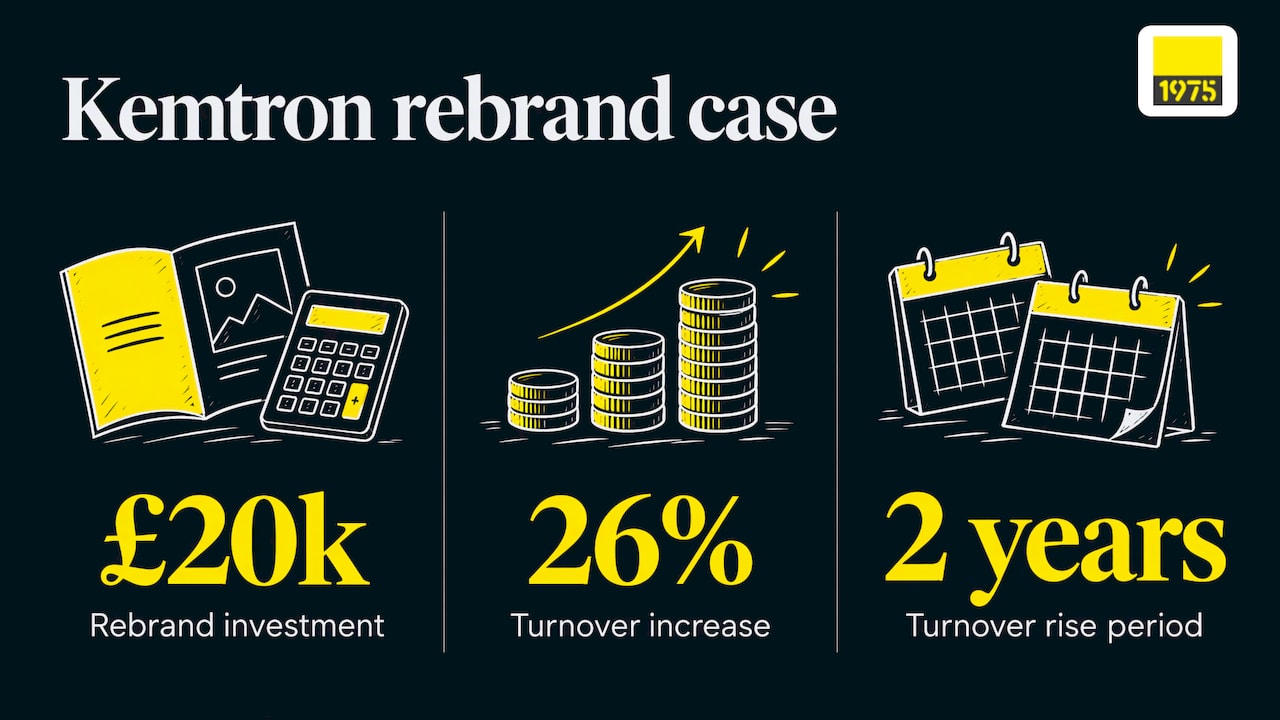
- Brand-led brochures pay back: the Design Council’s guide cites a manufacturer whose turnover rose 26% in the two years after a rebrand that began with a product brochure.
- A written brief, one point of contact and fixed review points keep scope, timeline and cost under control.
- Copy, hierarchy and restraint with type and colour matter more than decoration.
- Choose a studio that joins art direction, branding and layout, so print, digital and campaign material look like one company.
Table of Contents
- What a brochure design agency actually does
- Why the brochure is a brand decision
- Corporate, business and sales brochures: which do you need?
- How a brochure project runs, stage by stage
- What to put in your brief
- What affects scope, timeline and cost
- Design principles that make a brochure work
- Redesigning an existing corporate brochure
- How to choose a brochure design studio
- Promo: brochures built on a brand
- Perspective
- FAQ
- Sources
What a brochure design agency actually does
Most people searching for brochure design services expect layout: someone arranges your text and photos on a page. A strong agency does more, because layout is the last step of the job, not the first.
The work usually covers:
- Clarifying the purpose. Who will read this, in what situation, and what should they do next?
- Shaping the story. Deciding what goes on the cover, what leads each spread and what can be cut.
- Visual direction. Typography, colour, imagery and photography that express your brand.
- Layout and production. Designing the pages, preparing files for print or building an interactive digital version.
- Consistency. Making sure the brochure matches your website, stationery, presentations and campaigns.
That last point is where a studio with brand experience earns its fee. A brochure designed in isolation looks like it came from a different company than your website. One designed by the people who built or understand your identity looks like the same voice speaking in a different room.
Why the brochure is a brand decision
The Design Council’s Design Buyers’ Guide describes design as a strategic process rather than a finishing touch, and describes a brand as the sum of everything people associate with an organisation, not just a logo. A brochure is one of the densest carriers of that association: paper stock, photography, tone of voice and the order in which you present your claims all say something about you before anyone reads a word.
The same guide includes a case study that shows what is at stake. Essex manufacturer Kemtron invested £20k with a design associate and an agency in a rebrand that began with a product brochure and a website. According to its managing director, turnover rose by 26% over the following two years. One case is not a promise of your results, but it shows the right way to think about the spend: a brochure is where an identity first becomes something customers hold.
If your brochure is the first visible sign of a wider change, our guide to rebranding a business in the UK sets out how the pieces fit together.
Corporate, business and sales brochures: which do you need?
The terms overlap, but the job differs.
| Type | Main job | Typical reader | Design emphasis |
|---|---|---|---|
| Corporate brochure | Present the whole organisation, its values and credentials | Investors, partners, senior buyers, recruits | Brand story, restraint, premium finish |
| Business or sales brochure | Explain products or services and prompt an enquiry | Prospects in a buying process | Clear structure, benefits first, strong calls to action |
| Event or programme brochure | Guide a visitor through an occasion | Attendees | Scannable hierarchy, wayfinding |
| Digital brochure or publication | Engage on screen, link out, track reading | Online audiences | Interactivity, responsive pages, shareable format |
Publishers and membership bodies often find the line between a brochure and a magazine blurs. If your document runs to many pages with regular features, a digital publication design approach gives it room to behave like a magazine rather than a long PDF. Our guide to marketing collateral design shows how brochures sit alongside the rest of your sales material.
How a brochure project runs, stage by stage
Every agency has its own rhythm, but a well-run project follows the same logic.
1. Brief and discovery
The Design Council advises that even a brochure project should start from a clear understanding of company needs, vision and strategy, with some research into markets, competitors and trends. Expect questions you may not have answered yet: why now, who exactly are we talking to, and what should happen after someone reads it?
2. Concept and direction
The studio proposes a visual and editorial direction: cover ideas, a typographic palette, imagery style, and often a sample spread. This is the moment to judge whether the work expresses your brand, so judge it against the brief’s aims, not against personal taste. The Design Council’s guide recommends exactly that.
3. Layout and content development
Pages are built around real copy and real images. Placeholder text hides problems that only appear when your actual words meet the grid. Creative Bloq’s brochure design tips argue that copy is the most undervalued element in a brochure and that headlines are not something to drop in later. We agree: the writing and the design should develop together.
4. Review and sign-off
Build in set review meetings for concepts and sign-off, and nominate one person to collect feedback and speak for your side. Consolidated feedback from a single contact avoids contradictory instructions, the commonest cause of slipped timelines.
5. Production and delivery
For print, that means print-ready artwork prepared to the printer’s specification: size, fold, bleed, paper and binding. For digital, it means the finished interactive or PDF file, optimised for screens. A studio that has produced both will plan for each format from the start.
What to put in your brief
A good brief is the cheapest way to improve a brochure. The Design Council recommends covering company background, project aims, target audience and the practical specifics: who is responsible, the timescale, the budget and the delivery channels.
Before you contact a studio, gather:
- One sentence on the purpose. For example: help procurement managers shortlist us for framework tenders.
- Your audience. Job roles, what they already know, what worries them.
- Your key messages. Three to five at most. If everything is a priority, nothing is.
- Existing brand assets. Logo files, guidelines, fonts, photography, previous brochures.
- Format and channel. Printed, digital or both; approximate page count; how it will be distributed.
- Timeline and budget range. Be candid. A realistic budget lets the studio propose the right scope rather than guess.
- Decision-makers. Who approves, and who must be consulted.
If you do not yet have brand guidelines, say so. That changes the project from a brochure into something larger and better: an identity that the brochure can launch.
What affects scope, timeline and cost
Brochure design is fee-for-service, and the price follows the work involved. The main variables:
- Page count and complexity. A six-panel folded leaflet and a 40-page corporate brochure are different projects.
- Whether the brand already exists. Designing within a mature identity is faster than creating the visual language as you go.
- Content readiness. Approved copy and photography save weeks. Writing, art direction of a photoshoot or illustration add time and value.
- Format. Interactive digital editions need different production than print files.
- Review rounds. Clear feedback from one contact keeps rounds to a sensible number.
- Print and distribution. Paper, finishing and quantity sit alongside design fees.
We do not publish fixed prices because each engagement is shaped to the client’s aims. The useful comparison between agencies is not the headline fee but what each proposal covers: strategy, art direction, copy input, revisions and file formats.
Design principles that make a brochure work
People search for what makes a good brochure design, and the answer is rarely about decoration. It is about decisions.
Start with a reason
Creative Bloq advises asking clients why they need a brochure and defining objectives before any design begins. Every later choice, from page count to cover, gets tested against that answer.
Make hierarchy obvious
Readers skim. Cover, headings, subheadings, captions and calls to action should tell the story to someone who reads only those. Airbus’s brochure and leaflet guidelines show the discipline at scale: a standard title block as the basis for every cover layout so information is ranked the same way each time, and a logo in a fixed position on the cover. You do not need a global corporation’s rulebook, but you do need rules.
Limit your typefaces
Creative Bloq recommends limiting typefaces to a heading, a subheading and a body copy font. Restraint reads as confidence, and it keeps a multi-page document cohesive.
Let the images and white space work
One strong photograph that shows your product or people in context beats six generic ones. White space gives key messages room. Art direction of a bespoke shoot, where the budget allows, is the surest way to avoid the look of stock imagery that every competitor also uses.
Write for the reader, not the company
Lead each spread with what the reader gains. Case studies, figures and named clients turn claims into evidence.
Keep it consistent beyond the brochure
Colour, tone and layout logic should carry through to your website, social channels and every document a customer sees, including practical ones such as branded invoice templates that reinforce the same identity at the point of payment.
Redesigning an existing corporate brochure
A corporate brochure redesign is warranted when your offer, audience or brand has moved on and the document has not. Typical triggers: a new service line, a merger, a refreshed logo, or a brochure that no longer matches your website.
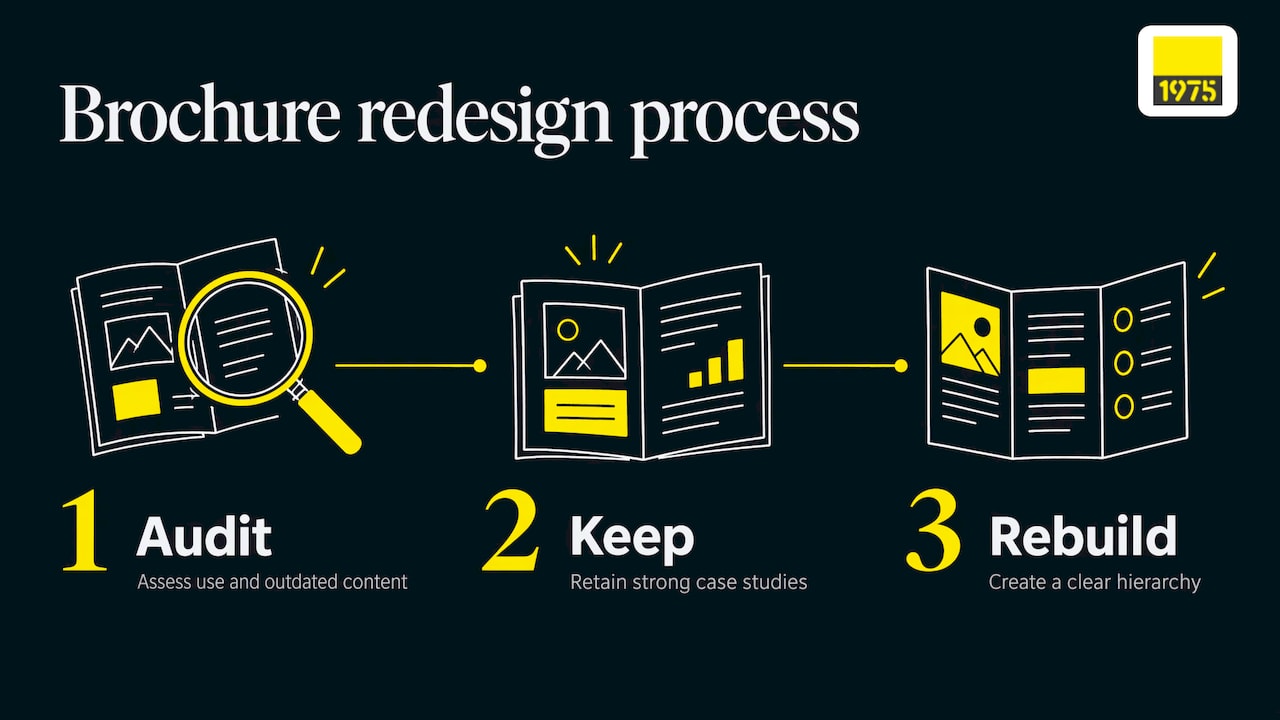
Start with an audit: what still works, what is out of date, and what readers actually use. Keep the elements with equity, such as strong case studies or a recognisable cover device, and rebuild the rest around a clear hierarchy. This is where design consultancy, including an audit of your existing material, saves money: it identifies what to fix before any pages are redrawn.
How to choose a brochure design studio
Look for evidence rather than adjectives.
- A portfolio of finished documents, not just logos. Check that layouts hold together across many pages. Our portfolio shows branding and publication work across sectors.
- Brand and editorial skills in one place. If the studio can build the identity, direct the photography and lay out the pages, the result is cohesive by design rather than by negotiation.
- Sector understanding. Work for bodies such as the Royal Town Planning Institute and for digital publishers like Inside Networks shows a range of audiences and formats.
- A clear process. Brief, concept, review points and sign-off should be stated up front.
- Print and digital capability. Your audience may read on paper in a meeting and on a phone afterwards.
Our guide to choosing a graphic design agency in the UK goes further into how to compare proposals.
Promo: brochures built on a brand
At 1975 we design brand identities, art direct campaigns and photoshoots, offer design consultancy including audits, and design and produce digital magazines, brochures and corporate literature. A brochure with us is built from the same thinking as the identity behind it, so your literature reads as one company, whatever the format.

If you have a brochure to commission or an existing one to rework, see what we do and tell us about your project.
Perspective
Most brochures fail before the layout begins. The brief is vague, the story is a list of services, and the design is asked to rescue it. We take the opposite view: a brochure is the brand made tangible, and it deserves the same care as the identity itself.
That is why we bring art direction, branding and storytelling into every piece of literature. When the same team shapes the idea, the imagery and the pages, the reader meets one confident voice, whether they hold a printed brochure or open a digital edition.
Our studio has worked this way since 2007, for organisations as different as a professional institute and a digital publisher. The sector changes; the principle does not. Design that tells your story clearly is design that gets chosen.
the author
FAQ
What is the difference between brochure design services and a brochure template?
A template fills your content into a fixed layout. A design service starts from your objectives and audience, develops the story and visual direction, and produces pages that fit your brand. The second approach is what makes a brochure distinctive rather than merely tidy.
How long does a brochure design project take?
It depends on page count, whether your brand guidelines exist and how ready your copy and images are. Fast, clear feedback from a single point of contact has the biggest effect on timing. Your studio will give a schedule with review points once it has your brief.
Should my brochure be printed, digital or both?
Choose by how your audience meets you. Printed brochures suit meetings, events and premium impressions; digital editions suit sharing, linking and tracking. Designing for both from the outset avoids rework, and we produce digital magazines and corporate literature alongside print material.
Can you redesign a brochure that already exists?
Yes. A redesign usually begins with a review of what works and what no longer reflects your brand, then rebuilds the hierarchy, imagery and copy around current aims. Design consultancy, including audits, is part of what we offer for this.
Sources
- Design Buyers’ Guide, Design Council
- Brochure design: 10 top creative tips, Creative Bloq
- Brochures and leaflets, Airbus brand guidelines
Recommended
- Choosing a Graphic Design Agency in the UK: A Practical Guide
- Magazine Design Agency: What You Get and How to Choose
- Marketing Collateral Design: What It Is and How to Get It Right
- Editorial Design: How Layout Makes Publications Work
No Comments
Comments are closed.