
Brand differentiation is the work of making your business meaningfully different from its alternatives in the minds of the people who buy from you, then expressing that difference so consistently that buyers recognise it without being told. The difference has to matter to buyers and has to be believable. It also has to be visible in everything you publish, from your logo to your sales deck to your digital magazine. When those three things line up, you compete on why you are chosen rather than on price alone. A design studio such as ours turns the strategy into an identity buyers can see, and that is where most differentiation efforts succeed or stall.
TL;DR
- Differentiation only pays when the difference is meaningful to your buyers, not merely unusual. Kantar’s analysis of almost 20,000 brands found that brands strong on meaning, difference and salience grew brand value five times faster.
- Start with the buyer and the competitive set, then write a positioning statement that names your difference and the proof behind it.
- Choose one of four routes: category leadership, distinctiveness, emotive clarity or functional benefits, and apply it the same way everywhere.
- A difference that is not designed into your identity, art direction and publications stays invisible.
- Measure it: recognition, preference, perceived difference and willingness to pay more.
Table of Contents
- What brand differentiation is, and why it earns money
- Step 1: Find what your buyers value
- Step 2: Choose a differentiation route
- Step 3: Express it in identity, voice and design
- A UK example of differentiation put into design
- Perspective: difference is built in the details
- Step 4: Keep it consistent
- Step 5: Measure whether the difference is working
- Where our studio fits
- FAQ
- Sources
What brand differentiation is, and why it earns money
Brand differentiation describes how your product or service is distinguished in the marketplace relative to competitors. It sits inside the wider job of brand positioning, which NIQ describes as defining your brand in consumers’ minds: differentiation, plus the target audience, plus how you communicate your selling proposition so that it resonates.
The commercial case is well documented. In Kantar’s May 2022 analysis of 40,000 brands, rising relative uniqueness showed a very strong relationship with willingness to pay more. A differentiated position can lower price sensitivity, protect margins and raise profitability. Kantar’s June 2023 work adds that meaningfulness combined with difference explains 94% of willingness to pay more, while meaningfulness combined with salience (how readily a brand comes to mind) explains 80% of purchase intent.
Two points follow for a business owner or marketing lead:
- Difference alone is not enough. The Marketing Society argues that perceived differentiation, the customer’s belief that your offer will meet their needs, is what carries value, because most unique features are irrelevant to most customers.
- Feeling matters as much as logic. Kantar’s Lindsay Gorton-Lee quotes Les Binet’s finding from nearly 2,000 case studies that there are no examples of persuading the public to pay more by rational argument alone. Making people feel something about the brand is the key, as set out in Kantar’s design-for-difference article.
That second point is why visual identity, tone and art direction are not decoration. They are how a brand makes people feel something, and how a difference gets noticed at all.
Step 1: Find what your buyers value
A difference nobody wants is a quirk. Begin with the people you want to win.
Harvard Business School Online advises researching your target audience’s needs, purchasing habits, ages and life stages. It then suggests answering five questions:
- Who is the product or service for?
- What need does it meet?
- How does your brand meet that need?
- Which similar brands will the buyer consider?
- How are you different, and what proof makes that believable?
Write the answers into one sentence: for [target market], our brand is the only one among [competitive set] that [point of difference] because [reasons to believe]. If you cannot finish it truthfully, you have found the gap to work on before any design begins.
Three practical ways to gather the inputs:
- Interview recent buyers and lost prospects. Ask why they shortlisted you and what nearly made them choose someone else.
- Audit your competitors’ words and visuals. Lay their websites, brochures and magazines side by side. If you could swap the logos and nobody would notice, there is an opening.
- Look at the choice drivers in your category. Kantar’s October 2024 research on decoding differentiation found that drivers such as accessibility and convenience differ by category, so what makes a difference relevant in one market may not in another. For software firms, creator partnerships are one way to hear how buyers talk about the category, and a guide to finding creators for SaaS brands shows how that works.
If you want a structured way to turn customer value into identity, a Carnegie Mellon paper describes the Value Opportunity Analysis. It scores seven attributes of customer value: emotion, contextual identity, impact, aesthetics, ergonomics, core technology and quality. Then it asks which your brand can own.
Step 2: Choose a differentiation route
Brands stand apart in different ways. Kantar’s July 2023 brand structures analysis identified four leading strategies:
| Route | What it means | What it asks of your brand |
|---|---|---|
| Category leadership | Setting trends and challenging the status quo | A clear point of view and the confidence to state it |
| Distinctiveness | A highly distinctive look and feel with a suite of reinforcing assets | A bold, consistent visual identity and art direction |
| Emotive clarity | A clear, strong emotional connection with consumers | A story and tone buyers recognise themselves in |
| Functional benefits | Superior qualities that set the brand apart | Proof of the benefit, communicated simply |
Most small and mid-sized businesses cannot out-spend a market leader, so the routes that reward craft are distinctiveness and emotive clarity. Both are built through identity, language and imagery. A professional services firm, a membership body or a publisher often has similar functional benefits to its rivals. What can differ sharply is how it looks, sounds and tells its story.
Whichever route you pick, Kantar’s three ingredients are a useful test. Be clear on your core, meaning what the brand is about beyond its product. Execute consistently. Then reinforce while reinventing, so the brand evolves but stays true to that core.
There is also a durability point. David Aaker, writing in MIT Sloan Management Review, notes that a specific point of difference can be copied, but a brand can own and manage a differentiator over years, so that it becomes credible, relevant and memorable. He cites Audi’s quattro as an example. Giving your difference a name, a look and a voice is how you make it harder to copy.
Step 3: Express it in identity, voice and design
This is where strategy becomes something buyers can see. Adobe’s positioning guide describes brand personality as built from mission and core values, then conveyed through words (tone and vocabulary) and imagery (fonts, colours, logos, pictures). In practice, a differentiated brand makes deliberate choices in five places.
Visual identity
Your logo, typography, colour and image style should be recognisable in a glance and ownable. Avoid the category’s default palette and stock imagery. If you are weighing a refresh, our guides on rebranding a business and logo design costs in the UK explain what is involved.
Verbal identity
A brand voice is part of the difference. Read your homepage aloud with a competitor’s name in place of yours. If it still works, your wording is not doing differentiating work.
Art direction
Photography, illustration and layout carry emotion faster than copy. Consistent art direction means every campaign and photoshoot looks like it comes from the same brand, which is how recognition builds. See what creative art direction delivers.
Publications and collateral
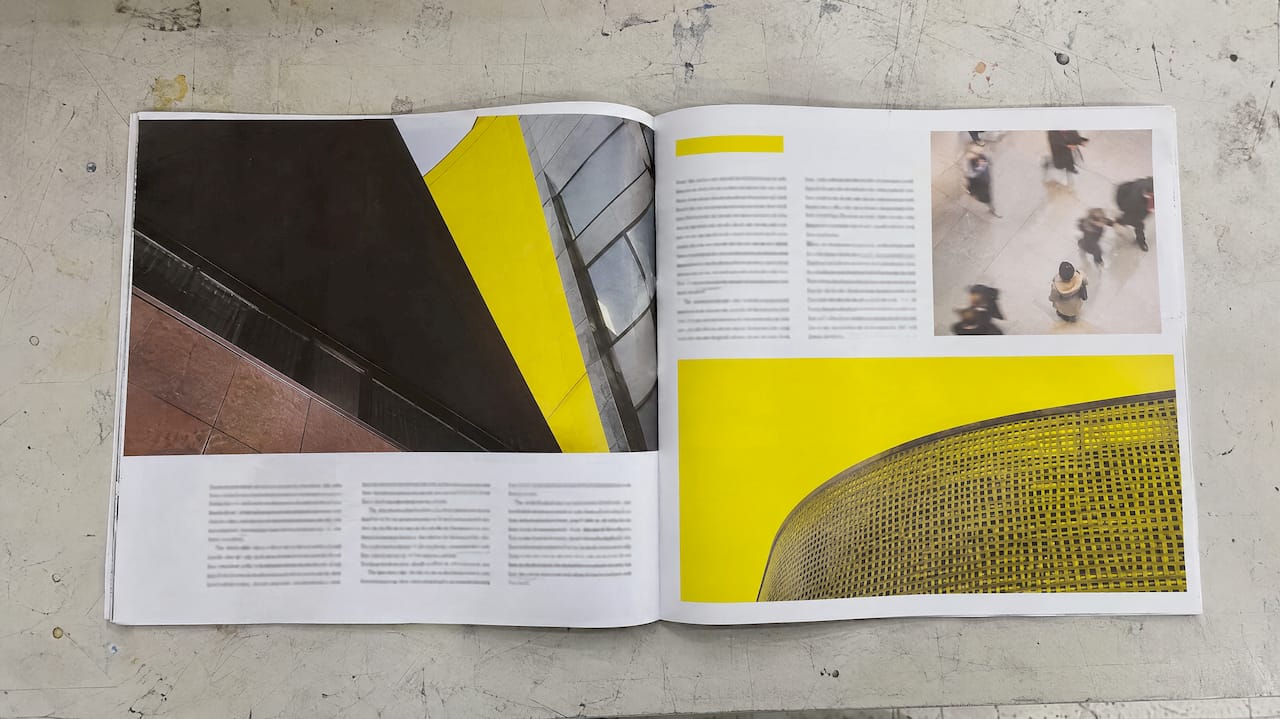
Brochures, reports and digital magazines are where a brand has room to tell its story at length. A digital magazine gives a publisher or a business the space to show a distinct point of view, with layout, pacing and imagery that belong to the brand alone. Our pages on digital publication design and marketing collateral design cover what this involves.
Brand architecture
If you have several products, divisions or sub-brands, your difference can dissolve unless the structure is clear. Our guide to brand architecture sets out the models and how to choose one.
A UK example of differentiation put into design
Reach’s rebrand of the Mirror began with an audit. The audit found a disconnect between print and digital brand values and a lack of consistency and distinctiveness across channels, as Marketing Week reported. The refresh aimed for a warmer, more human and empathetic perception across platforms.
The order of work matters. Audit first, then decide what the brand should feel like, then make it consistent wherever the audience meets it. The same sequence applies to a business with a fraction of that budget.
You can see how that thinking shows up in our own work in the Inside Networks case study and the wider branding portfolio.
Perspective: difference is built in the details
Most businesses we meet do not lack a difference. They lack a way of showing it. The founder can explain in two minutes why they are better, but the website, the proposal and the brochure say what everyone else’s say.
Our view is that differentiation belongs in the design brief from the first day. Art direction, identity and storytelling should be planned together, because a buyer forms a feeling about you long before they read a claim. That is why we integrate art direction with branding, and why our work, from the Royal Town Planning Institute to Inside Networks, starts with what the brand needs to be known for.
When the story, the look and the publication all say the same thing, the brand becomes easy to recognise and easy to choose. That is the result we design for.
the author
Step 4: Keep it consistent
Kantar’s second ingredient, consistent execution, is where many brands lose the benefit. A difference stated in a strategy document and expressed differently by each team is not a difference.
To hold it together:
- Write a short brand guide covering the positioning statement, tone of voice, logo use, colour, type and image style, with examples of right and wrong.
- Name your distinctive assets (a colour, a shape, a phrase, a photographic style) and use them every time.
- Brief every supplier from the same document, from copywriters to printers to event teams.
- Review quarterly against what is actually being published, not what was intended.
If you are choosing an outside studio to do this, our practical guide to choosing a graphic design agency in the UK lists what to look for.
Step 5: Measure whether the difference is working
A useful framework from the British Institute of Branding asks three questions. Is the brand easy to think of (salience, familiarity, recognition of distinctive assets)? Is it easy to choose (consideration, preference, relevance, perceived difference and value)? Does it support price and margin (willingness to pay a premium, price sensitivity, discount dependency)? It also advises linking measures to commercial outcomes as far as practical, and warns against overstated attribution claims.
That honesty is worth adopting. Price premiums can be measured directly, and other effects are inferred over time from customer behaviour. The gap between belief and evidence is real: Marketing Week reported that almost nine in ten marketers believe strong brands have pricing power, yet only 40% can link brand equity to a premium.
The IPA, the UK professional body for advertising and marketing, notes that differentiation is a critical lever in justifying higher prices where products are functionally similar, such as hotels, airlines and restaurants. It also notes that it pays back most where competition is intense and switching costs are low. If you sell in a market like that, the case for investing in a distinct identity is strongest.
For a practical starting set, track:
- Unprompted and prompted awareness among your target buyers
- How often buyers pick your brand out of a line-up of your assets with the logo removed
- Win rate and discounting on proposals
- Enquiry quality, meaning how many arrive already knowing why they want you
Our guide to brand metrics explains what to measure and how to use the results.
Where our studio fits
We are a graphic design studio in Norwich, working since 2007 on brands and digital magazines. We take differentiation from positioning to finished identity: brand identity, art direction for campaigns and photoshoots, design consultancy including audits, and the design and production of digital magazines, brochures and corporate literature. Our integrated approach to art direction and branding is underpinned by a commitment to storytelling through design, so the difference you identify shows up in everything your buyers see.
If you are ready to make your brand unmistakable, talk to our studio about your brand.

If your concern is sector-specific, our page on a nonprofit branding agency covers what a charity brand partner delivers, and our digital magazine work shows publications built around a distinct voice.
FAQ
What is the difference between brand differentiation and brand positioning?
Differentiation is how you stand apart from competitors. Positioning is the broader process of defining your place in buyers’ minds, which includes differentiation, your target audience and how you communicate your value. Differentiation is the part buyers notice; positioning is the plan behind it.
How do you differentiate a brand when competitors offer the same thing?
Compete on meaning and recognition rather than features. Identify what your buyers care about, choose a route such as distinctiveness or emotive clarity, and express it through identity, tone and imagery. Where functions are similar, a brand that feels clearly different is easier to remember and to choose.
What are the main brand differentiation strategies?
Kantar identifies four: category leadership, distinctiveness, emotive clarity and functional benefits. Pick the one that fits your audience and resources, then apply it consistently over time rather than switching each year.
How long does it take to see results from differentiation?
Some effects, such as price premiums, can be measured directly. Others emerge over time through patterns in customer behaviour, so set baselines before you change anything and review them regularly. Consistency across channels is what builds recognition.
Sources
- Kantar: When value is at stake, you need to design for difference
- Kantar: Can brand differentiation improve marketing effectiveness?
- The Marketing Society: Differentiation that matters
- NIQ: Brand positioning
- Harvard Business School Online: How to Craft the Perfect Brand Positioning Statement
- Carnegie Mellon: A step-by-step process to build valued brands
- Kantar: Decoding Differentiation
- Kantar: Imbuing brands with a sense of difference
- MIT Sloan Management Review: The Power of the Branded Differentiator
- Adobe: The ultimate guide to brand positioning strategy
- Marketing Week: Inside the Mirror’s new brand
- British Institute of Branding: Measuring Brand So It Means Something to the Board
- Marketing Week: The Language of Effectiveness
- IPA: What consumers will pay more for
- Enclaverse: How to Find Creators for SaaS
Recommended
- Brand Architecture: Models, Types and How to Choose
- Rebranding a Business: A Practical UK Guide
- Marketing Collateral Design: What It Is and How to Get It Right
- Brand Metrics: What to Measure and How to Use Them
One Comment
Brand Strategy Process: Seven Stages From Brief to Launch at 3:00 am, November 24, 2026 -
[…] differentiation is your central challenge, our guide to brand differentiation goes deeper. If you run more than one product, division or sub-brand, settle how they relate before […]
Comments are closed.